
书籍介绍
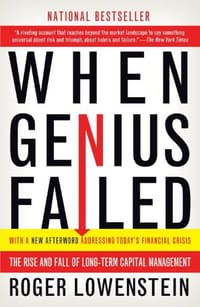
On September 23, 1998, the boardroom of the New York Fed was a tense place. Around the table sat the heads of every major Wall Street bank, the chairman of the New York Stock Exchange, and representatives from numerous European banks, each of whom had been summoned to discuss a highly unusual prospect: rescuing what had, until then, been the envy of them all, the extraordinarily successful bond-trading firm of Long-Term Capital Management. Roger Lowenstein's When Genius Failed is the gripping story of the Fed's unprecedented move, the incredible heights reached by LTCM, and the firm's eventual dramatic demise.
Lowenstein, a financial journalist and author of Buffett: The Making of an American Capitalist, examines the personalities, academic experts, and professional relationships at LTCM and uncovers the layers of numbers behind its roller-coaster ride with the precision of a skilled surgeon. The fund's enigmatic founder, John Meriwether, spent almost 20 years at Salomon Brothers, where he formed its renowned Arbitrage Group by hiring academia's top financial economists. Though Meriwether left Salomon under a cloud of the SEC's wrath, he leapt into his next venture with ease and enticed most of his former Salomon hires--and eventually even David Mullins, the former vice chairman of the U.S. Federal Reserve--to join him in starting a hedge fund that would beat all hedge funds.
LTCM began trading in 1994, after completing a road show that, despite the Ph.D.-touting partners' lack of social skills and their disdainful condescension of potential investors who couldn't rise to their intellectual level, netted a whopping $1.25 billion. The fund would seek to earn a tiny spread on thousands of trades, "as if it were vacuuming nickels that others couldn't see," in the words of one of its Nobel laureate partners, Myron Scholes. And nickels it found. In its first two years, LTCM earned $1.6 billion, profits that exceeded 40 percent even after the partners' hefty cuts. By the spring of 1996, it was holding $140 billion in assets. But the end was soon in sight, and Lowenstein's detailed account of each successively worse month of 1998, culminating in a disastrous August and the partners' subsequent panicked moves, is riveting.
The arbitrageur's world is a complicated one, and it might have served Lowenstein well to slow down and explain in greater detail the complex terms of the more exotic species of investment flora that cram the book's pages. However, much of the intrigue of the Long-Term story lies in its dizzying pace (not to mention the dizzying amounts of money won and lost in the fund's short lifespan). Lowenstein's smooth, conversational but equally urgent tone carries it along well. The book is a compelling read for those who've always wondered what lay behind the Fed's controversial involvement with the LTCM hedge-fund debacle. --S. Ketchum
用户评论
An epic account of how the legendary LTCM, an investment Dream Team led by a hero of the Liar's Poker, quickly rose to stardom with its computerised and mathematics-based investment models, only to find itself lose it all in five weeks amid irrational market conditions, due to lax governance, excessive leverage and inherent flaws of the models.
好精彩的书!三天就可以看完。看前半本的时候简直气也不敢透。一代华尔街hedge fund的起落,短短四年,却像一部看透人生的剧。作者说的好:when you need money, Wall Street is a heartless place。
好书!看得我心潮澎湃的~
今年读过的最好的商业书籍,对LTCM的兴起与衰落进行了完整复盘。虽然作者很cynical,但既未为LTCM文过饰非,也没有落井下石地对他们进行不公正的道德指责,忠实记录了LTCM如何在成功投资后过于迷信自己的model而丢掉了谨慎,在贪婪和业绩压力下步入自己不熟悉的risk arbitrage领域投下重注,genius们的分歧、冲突,overuse the leverage on interest swaps,直到黑天鹅的出现导致credit spread飙升,市场走势和模型预测完全相反,满盘皆输,最终被高盛敲下了棺材上的最后一根钉子。
记不住英文人名。。。。。啊啊啊啊啊啊~~~~对技术性的东西描述的太少了
how to blow out your portfolio with ego..
所有的失败都是相似的,不熟悉的领域加重注,承担过高的风险。
这本书我在做律师的头几天就被人推荐过,因为"里面提到了我们组的大老板".这些年来我拿起过很多次,又放下了很多次.这一回的机缘是最近开始听audible,我发现我无法听小说,怎么试都不行,但是听nonfiction就正好.
这本书跟之前刚听完的讲文艺复兴的那本相比,干货多一点,作者对金融市场的基本规则和产品有很深的了解(而那本的作者则像是拜倒在文艺复兴那群聪明人石榴裙下了),但也许正因为了解多,偏见也多。这个作者还写了一本讲巴菲特的书和另一本价值投资的书,但在这本书里,你可以很强烈的感受到,首先,他不喜欢nerds,第二,他理解为什么有些人不喜欢巴菲特,第三,他觉得全世界讨厌高盛是理所应当的。
笑死,最后一章作者写到,banker们和政客们一样犯了错很快就能再爬起来,圈子里人们的记忆周期不会超过一个经济周期,正如也不会超过一个大选周期。扛过第一章对JM童年的过度描写我觉得总体写的还不错。
又是一本跨过大洋才读完的书,需要反省一下自己。当所做的业务跟最初设想的模式已经偏离很多时,可能需要问问是什么地方出了问题。